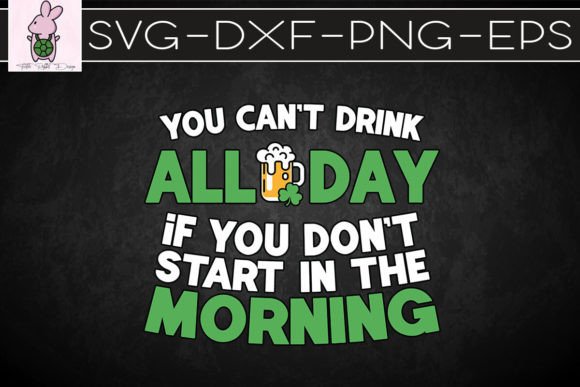
You Can’t Drink All Day Beer SVG
First Impressions: A Lighthearted, Tight-Lipped Grin in Stitch Form
As someone who’s digitized and stitched over 300+ text-based designs for apparel, patches, and boutique gifts, my first glance at You Can’t Drink All Day Beer SVG landed somewhere between “ah—yes” and “handle with cheerful caution.” It’s got that effortless, slightly cheeky charm you’d expect from a well-crafted bar napkin doodle—but translated into clean vector lines. The phrase flows horizontally, not stacked, with subtle kerning that avoids crowding. No beer mugs or foam sprays cluttering the composition—just crisp, bold lettering with gentle curves on the “B” and “D.” That simplicity is its biggest strength—and its quietest warning.
Real Project Test: Embroidering It on a Linen-Cotton Tote Bag
Last week, I used You Can’t Drink All Day Beer SVG to embroider a 9” x 10” linen-cotton tote for a local brewery’s weekend pop-up. Not as a logo—but as a playful back-panel accent, centered just above the seam. I chose a medium-weight cutaway stabilizer, 40-weight polyester thread in deep charcoal (for contrast on natural fabric), and ran it at 85% size to keep stitch density manageable. The result? Clear, legible, and unmistakably handmade—not screen-printed. Customers paused. Smiled. Asked where it was made. That’s the power of a well-executed, personality-forward embroidery file: it invites conversation without shouting.
Where It Shines (and Where It Asks for Extra Care)
You Can’t Drink All Day Beer SVG works beautifully on:
- Sweatshirts and hoodies — especially mid-to-large chest placements where fabric tension stays even;
- Tote bags and tea towels — its horizontal rhythm mirrors the natural grain and flow of woven textiles;
- Embroidered patches — the clean edges translate cleanly to merrowed or heat-applied backing;
- Aprons and kitchen linens — fits the “casual-but-considered” tone of modern foodie culture;
- Holiday or wedding “funny gift” items — think embroidered pillow covers for groomsmen or baby onesies (with age-appropriate context, of course).
But here’s what I watched closely—and recommend you do too:
- Small hoop sizes (under 4”): At full cup-sized scale, this design likely pushes 3.75–4.25” wide. Shrinking it below 3” risks losing letter clarity, especially in the inner counters of “A,” “O,” and “D.”
- Thin or stretchy fabrics: On lightweight knits or baby rib, use tear-away + topping—or better yet, switch to a simplified outline version if your software allows. Fill stitches can pull and distort.
- Dark or textured backgrounds: The design relies on contrast. On black terry cloth or heavy burlap, test satin-stitched letters versus running-stitch outlines. Sometimes less density reads louder.
- Caps and curved surfaces: Avoid placing it across the front crown unless you’re using a cap frame and have verified stitch path logic. Curves exaggerate letter spacing inconsistencies.
What It Adds to Your Finished Product—Beyond the Obvious
This isn’t just a phrase—it’s a micro-branding opportunity. When stitched thoughtfully, You Can’t Drink All Day Beer SVG elevates a plain tote into a curated, small-shop statement. It signals confidence in craft, awareness of audience (adults who appreciate dry wit), and attention to typography-as-tactile-experience. For Etsy sellers, that translates directly to higher perceived value and fewer “Is this machine or hand-stitched?” questions. For craft fair vendors, it becomes a conversation starter that builds trust before the first sale.
But—and this matters—its success hinges on execution. A dense fill stitch on low-thread-count cotton will look muddy. A poorly stabilized run on fleece will pucker and obscure the “t” crossbar. So while the SVG itself is clean and software-friendly, the *embroidery file* you generate from it must respect fabric behavior, not just vector geometry.
Practical Designer Notes Before You Stitch
Before committing to your first client project or batch production:
- Test on scrap fabric first—same fiber content and weight as your final piece;
- Check thread color contrast in both daylight and indoor lighting; gray-on-gray looks elegant until it doesn’t;
- Review stitch density—especially in the lower loops of “g” and “y.” Overly dense fills trap lint and wear unevenly;
- Confirm hoop size compatibility—don’t assume “cup-sized” means “fits all 4x4 hoops”; measure the actual design bounding box;
- Inspect small details at 200% zoom in your embroidery software—look for stray nodes or overlapping paths;
- Test black-and-white mockups to gauge legibility at distance and on varied backgrounds;
- Use proper stabilizer—cutaway for knits, tear-away for stable wovens, topping for napped fabrics;
- Verify licensing before selling finished items or bundling the digital embroidery file—this is a Graphics asset intended for Crafts use, but commercial rights vary by seller.
Final Thought: Personality With Precision
You Can’t Drink All Day Beer SVG isn’t trying to be profound. It’s trying to be memorable—and it succeeds, as long as you treat it like a design partner, not a plug-and-play shortcut. It rewards thoughtful placement, smart stabilization, and respect for how thread behaves on real fabric. Used well, it turns everyday items into shareable moments. Used hastily? It just looks like text on cloth.
If you’re stitching for joy, profit, or both—this one’s worth keeping in your active rotation. Just remember: the best embroidery doesn’t shout the joke. It lets the craftsmanship deliver it.